Biography
Baldassarre D'Avino
I have just reached the age of fifty-two and have completed my third collection, titled “Adam and Eve, Two Extraterrestrials?”. I had been anticipating this collection for a long time, as I had wanted for years to revisit the figures of Adam and Eve.
I am a practicing Catholic. I believe in one God, and my little book is a collection of aphorisms, reflections, and notes on everything that surrounds us and how I perceive it. I wanted to share these writings—brief yet intense—in this collection. I am already preparing for the next one, which will be titled “There Is a Paradise!”.
I have Campanian origins: I was born at the foot of Mount Somma, in a town with a strong agricultural vocation called Somma Vesuviana. My paternal family is well known in the area as fruit traders and exporters, a business started by my great-grandfather. My maternal family, on the other hand, comes from the town of the Lilies, Nola, where we remember—and Nola remembers—our ancestor, Father Francesco Palliola, a Jesuit who was martyred on the island of Mindanao in 1648 by the indigenous people.
As for me, I traveled extensively during the early years of my adolescence until 2014. I lived for long periods in the United Kingdom, the United States, and Venezuela. Now I am settled between Somma Vesuviana and Nola, where my mother lives with my brother Renato. Currently, I take care of everything related to my family, both emotionally and in terms of our assets.
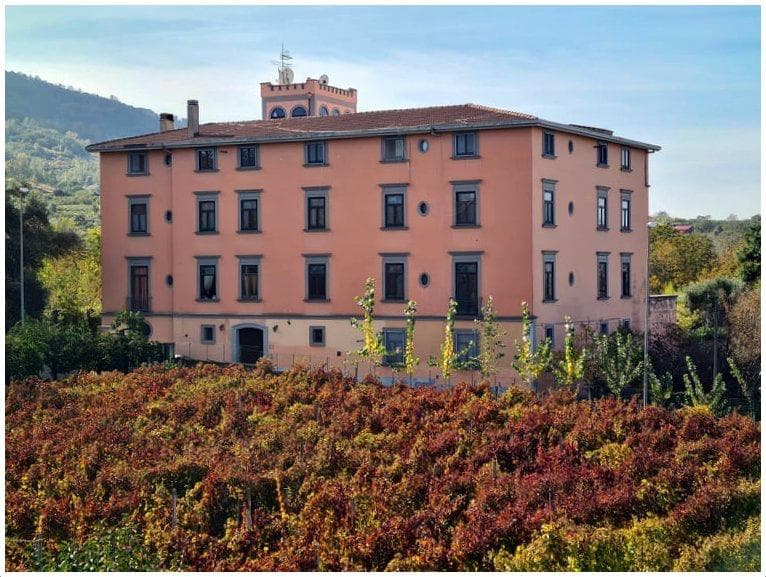
Immersed in the greenery of the Ammendolara countryside, the majestic 19th-century Palazzo Tafone rises in all its grandeur. It once served as a country residence and a place for collecting the agricultural products of the family. In 1951, the property was sold by the last heir of the Tafone family to the entrepreneur from Somma, Baldassarre D’Avino.
In the first volume of the provisional land registry of 1811 for the Municipality of Somma, it is recorded, in subsequent updates regarding new owners – reasons for acquisition or disposal – that on September 11, 1857, Domenico Tafone owned a rustic house, vineyard, woodland, and outbuildings on Marina Street. The land came from the estate of the heirs of the farmer Vincenzo De Stefano. Before passing to Tafone, the same properties were registered on September 6, 1856, under Salvatore Molaro, who had sought the help of an expert Neapolitan lawyer to navigate some legal matters. The lawyer Tafone did not prefer money but instead desired a parcel of land where he could build a palace. It should be noted that in the 1800s, that area was vast, flat, and contained numerous vineyards belonging to the Casa dell’Annunziata of Naples, as noted in the cadastral map of the time by cartographer Luigi Marchese. Moreover, in 1819, only four families resided on Marina Street, all with the surname Di (De) Stefano, including the mentioned Vincenzo, who had already passed away, leaving behind his wife, Rosa Castaldo.
Lawyer Domenico Tafone was a privileged Neapolitan who did not hesitate to offer his services for the benefit of the poor. In this regard, in 1876, he was a member of the distinguished Charity Commission of Montecalvario in Naples. Additionally, he was an esteemed lawyer both at the Court of Appeal and at the Civil and Correctional Tribunal of Naples. He married Donna Amalia Schioppa, with whom he had four children: three sons and a daughter. Donna Amalia was born on May 17, 1827, in Naples (Montecalvario district) to Filippo, an inspector of Public Lighting, and Donna Clementina Castiglia.
In December 1938, another brother, Fausto, also immigrated to Somma from Naples with his wife and two children. The residence in Somma—according to the late Prof. Raffaele D’Avino—can be dated, based on its layout and architectural elements, to the mid-19th century. The building, which gained importance over time, served not only as a residence but also as a place for the collection of the family’s agricultural produce.
The Tafones, however, were quite an eccentric family, as reported by engineer Marco Ricciulli in his article about Villa Tafone in Naples. Giulio, while living in his Neapolitan villa, resided in a house (now the home of Liliana Pane, above the Chiana Romana of Posillipo) without water or electricity. His bed was always made, yet he oddly slept on the couch. In 1899, he was among the noble vacationers of Somma Vesuviana who contributed to the success of the local Piedigrotta festival. Moreover, upon his death, hundreds of used matchboxes were found carefully stored. Fausto, married to Maria Bertel, as previously mentioned, had two children: Nino and Bebè Tafone. He, too, was a peculiar character who loved to spend lavishly, especially for the Piedigrotta festival in Naples. He would spend hours in the courtyard, sitting under a straw canopy, wearing a red beret that touched his long white beard. He soon ran out of money and lived as a humble fisherman, spending his final days in the tuff cave of his property.
The palace in Somma was sold in 1951 by Domenico, a grandson of the family patriarch, to the local entrepreneur Baldassarre D’Avino, who already owned numerous plots of land around the estate. It was the immediate post-war period, and many Neapolitan nobles not only lost their social exclusivity but also their wealth, sometimes falling into absolute poverty. In 1975, the Municipality of Somma Vesuviana, in agreement with the new owners, commissioned architect Giacomo Maria Falomo (b. 1936) to design a retirement home for the elderly. However, the project was never completed; instead, as D’Avino stated, it was redirected to another area, where today stands the unfinished and deteriorating retirement home. Following the catastrophic earthquake of 1980, with the help of state subsidies, structural consolidation work was carried out.
Today, the building has been restored to its full splendor thanks to the descendants of the aforementioned Baldassarre D’Avino, son of Salvatore and Maria Benedetta Matilde De Stefano. It is accessed via an inter-farm road known as "della Marina," a reminder of the ancient connection, dating back to Roman times, to the Neapolitan sea. The area is part of the vast Ammendolara district, one of the most productive and well-cultivated hillside zones of its time. The building was, and still remains, a typical courtyard house, with rooms on three sides and a perimeter wall enclosing the quadrangle, including a beautiful courtyard facing the garden.
The palace’s façade, very linear, faces east toward the town, specifically the Casamale district. The late Prof. Raffaele D’Avino described it architecturally in an article from 1984: “…Access to the interior was provided by a tall gate, topped by a strongly depressed arch, with the entrance framed by a stucco cornice. In front of it, a small open space allowed carriages and carts to maneuver more easily. The chapel, following the common layout of other local palaces, was accessible both from the outside and the inside. At the roof’s peak stood a small bell tower with an openwork wall, culminating in a pediment. The chapel’s interior was modest and minimally decorated. The inner courtyard was reached through an irregularly shaped hallway. To the left rose the tower staircase (…). Common-use spaces such as an oven, washhouse, storage rooms, and the indispensable well were distributed throughout the courtyard. A flight of stairs, set on a vaulted ceiling, led to the first floor, where along a balcony, the entrances to the interconnected rooms were located (…). A similar layout was found on the second floor, where the balcony’s solid wall was interrupted by sections of iron railings.” An architectural masterpiece of great beauty, still alive, that continues to evoke feelings of warmth and admiration in those who observe it.
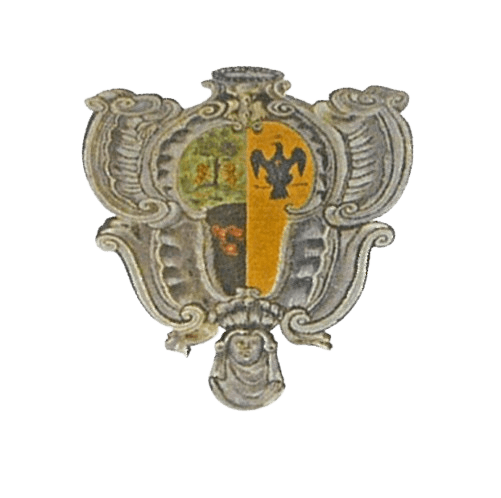
The Palliola family is one of the oldest families in the city of Nola (NA). In fact, the archives of the Verginian Monastery of Montevergine contain a parchment dated January 10, 1068, regarding a land exchange between the Bishop of Nola, Giovanni, and others. In this parchment, two Palliolla (Johannes and Leo Pallayoli) are mentioned.
On January 10, 1612, Father Francesco Palliola, a Jesuit, was born in Nola to Andrea and Antonia Caiazzo. In 1638, he joined the Society of Jesus, like another Jesuit from Nola, the noble Marcello Mastrilli. He traveled to the Philippines to spread the Gospel, built three churches and many houses, and was brutally killed on the island of Mindanao on January 19, 1648, by the local indigenous people. His body was pierced by numerous spear wounds, and he died kneeling, holding a crucifix in his hands.
The Father was beatified but is still awaiting canonization.
In February 2007, a conference was held at the Church of St. Blaise in Nola, where the precious tomb of Countess Maria Sanseverino is located. She was the daughter of Diadora Piccolomini and Bernardino, Count of Tricarico and Prince of Bisignano, and in 1513, she married the last Count of Nola, Enrico Orsini. The conference's theme was "The Society of Jesus in Nola: history with unpublished documents of the Jesuit from Nola, P. F. Palliola." On this occasion, unpublished documents and letters sent by the missionary to his mother were displayed. The documents include the Palliola family's rights of chaplaincy and burial in the Cathedral of Nola. Additionally, in their palace on Via San Paolino, the family had an altar where Mass was celebrated twice a week.
The nephew of the aforementioned martyr was U.J.D. Saverio, who had eight children with Rachele Riccardo, five of whom became religious figures: two priests, two Jesuits, and the Cathedral Canon, Don Nicola, who was several times the Capitular Vicar.
His successor was his son Gaetano (1720 † 1795), who had five children with Maria Rosa Finelli, but the lineage was only continued by his son Gioacchino (1764 † 1842). Gioacchino, in turn, had eight children with Donna Margherita Cimmino.
At that time, Nola had very few noble families, making it impossible to elect representatives for municipal offices. Some noble families from the surrounding area were proposed, but the citizens did not accept them. The King was then consulted, and with a decree on March 25, 1798, he declared several families as Patrizi of Nola. These families, living in the city "More Nobilium," were Cocozza, De Marco, Palliola, and Vivenzio.
Thus, Don Gioacchino Palliola was recognized as part of the Nola nobility.
The family then divided into two branches: one descending from Gaetano (1797 † 27.02.1868) and the other from Francesco Antonio (1800 † 1871). Francesco Antonio married Donna Caterina Mirelli, Duchess of St. Andrea. Among their children, Don Carlo continued the lineage by marrying Donna Antonia d'Elia. From this union, Don Francesco was born, who later married Donna Anna Pagano, and they had three children: Carlo, Maria, and Rita. However, this branch's male lineage ended as Carlo remained unmarried.
The first-born branch continued with Nicola (1824 † 1894), who married Donna Francesca Silvestri, and among their children was Nazario. Nazario had Gaetano, Anna, Mario, Adele, and Francesca with Carmela Ippolito.
Gaetano married Giuseppina Galdi, whose brother Ugo married Anna, Gaetano’s sister-in-law. Mario emigrated to the United States, continuing the lineage with his son Mario and grandson Nike.
From Gaetano, the first-born, and Giuseppina Galdi, four children were born: Nazario, Alberto, Bruno, and Ennio. Nazario had a son, Bruno; Alberto had a daughter, Cristina; Bruno had no children; and Ennio had two sons, Paolo and Riccardo. The family remains prosperous to this day.
As previously mentioned, the Palliola family had a noble burial site in the Cathedral of Nola and a beautiful palace on Via San Paolino. The palace’s main hall still contains a magnificent 18th-century altar, a ceiling frescoed by Mozzillo, and, recently discovered during restoration, a finely painted coffered ceiling, likely dating back to the 14th century. The palace is currently owned by the descendants of Carlo's sister.
Genealogia
Saverio (1679 † 1747), U.J.D., married Rachele Riccardo
- B1 - Angela (1704 † ?)
- B2 - Ignazio (1707 † 1790), Reverend
- B3 - Paolino (1709 † ?), Jesuit
- B4 - Giuseppa (1711 † 1770), married in 1747 Notaris
- B5 - Giovanni Battista (1712 † ?), Jesuit
- B6 - M. Anna (1715 † 1775), virgin in hair
- B7 - Francesco Antonio (1718 † 1766), Reverend
- B8 - Gaetano (1720 † 1795), married Donna Anna Rosa Finelli from Naples
- C1 - Maria Felicia (1757 † ?), married Baron Nicola di Mauro from Palma Campania
- B9 - Nicola (1724 † 1805), Dean
- B10 - Biaggio (1727 † ?)
- B11 - Chiara
- C2 - Maria
- C3 - Gioacchino (1764 † 06.11.1842), Provincial Secretary, First Patrician of Nola, married Donna Margherita Cimmino from Capua in 1786
- D1 - Anna Maria (1787 † 1867), Sister Caterina
- C4 - Francesco Antonio (1768 † ?)
- C5 - Maria Giacoma (1768 † ), twin of Francesco Antonio
- C6 - Maria Saveria (1760 † 1853)
- D2 - Maria Raffaela (1788 † 1855)
- D3 - Maria Michela (1790 † ?)
- D4 - Gaetano (1797 † 27.02.1868) - See Gaetano's descendants
- D5 - Francesco Antonio (1800 † 1871) - See Francesco Antonio's descendants
- D6 - Giuseppe (1795 † ?)
- D7 - M. Emerenziana (1792 † 1872), Abbess of St. Clare
- D8 - M. Clementina (1804 † ?)
Descendants of Gaetano (1797 † 27.02.1868)
In 1824 he married Maria Assunta Auriemma of Luigi
- A1 - Anna Maria (1825 † 1834)
- A2 - Nicola (1824 † 1894), married Francesca Silvestri in 1852
- B1 - Margherita (b. 1853)
- B2 - Giovacchino (b. 16.08.1855)
- B3 - Matilde (b. 1859)
- B4 - Silvio (b. 1863)
- B5 - Elisa (b. 1865)
- B6 - Nazario (b. 1867)
Descendants of Francesco Antonio (1800 † 1871)
He married Donna Caterina Mirelli, former Duchess of St. Andrea
- A1 - Alfonsa (1825 † 1894), Sister Maria Teresa
- A2 - Margherita (1828 † 1891), Sister M. Chiara
- A3 - Gioacchino (1831 † 1892)
- A4 - Carlo (b. 1839), married Antonia d'Elia Jacobi
- B1 - Caterina (b. 1898)
- B2 - Francesco
- C1 - Carlo
- A5 - Luigi (1842 † 1916), Redemptorist, died in Bishop-Eton